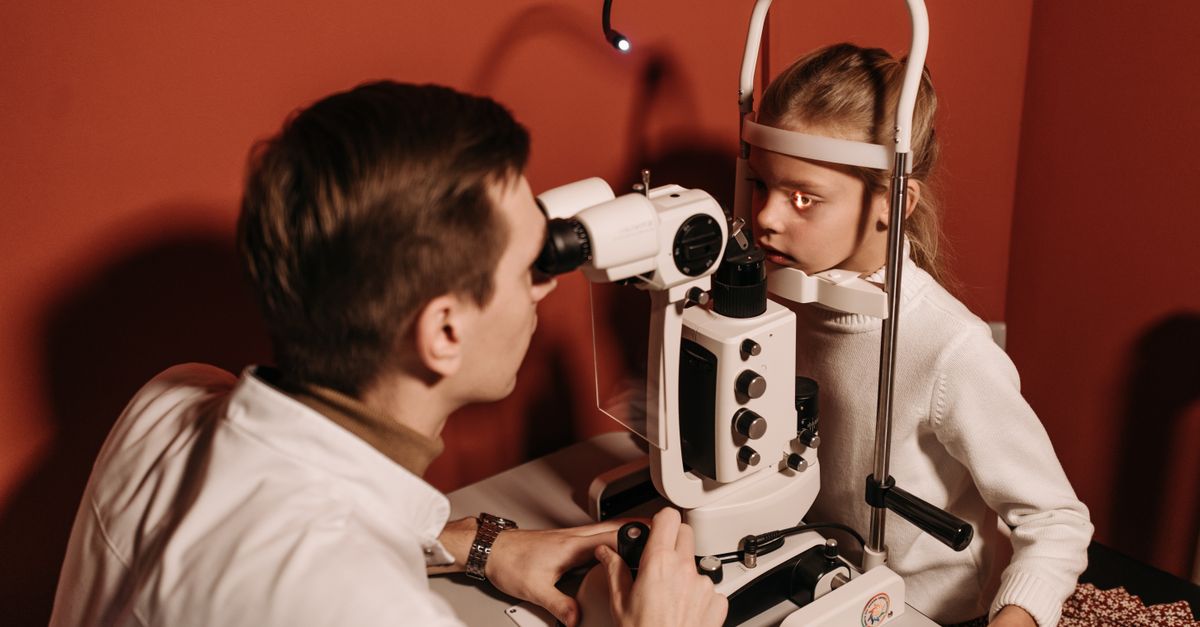
Eye twitching is most often an involuntary contraction of tiny muscle fibers in the eyelid, known medically as "myokymia." The vast majority of cases are harmless; lack of sleep, stress, too much caffeine and long hours of screen use are the most common triggers, and the twitching usually goes away on its own within a few days to a few weeks. However, if the twitching lasts for weeks, completely closes the eyelid or spreads to other parts of the face, you should be evaluated by an eye doctor or a neurologist.
In this guide, we explain in plain language the causes of eye twitching, what you can do at home, which conditions are not "harmless twitching," and what we look for during an examination.
What is eye twitching?
Eye twitching is a rhythmic, mild, involuntary contraction of part of the ring-shaped muscle that closes the eyelid (the orbicularis oculi). It is usually felt in one eye, most often in the lower lid, and sometimes in the upper lid as well.
Most of the time, only the person experiencing it notices the twitch. You may see a slight flutter in the eyelid when you look in the mirror, but others generally cannot tell. Episodes last a few seconds, repeat throughout the day, and may come and go over several days or weeks.
What causes eye twitching?
The most common cause of eye twitching is that the nerve fibers that stimulate the eyelid muscles temporarily become "overly sensitive." The triggers are mostly related to everyday life:
- Fatigue and lack of sleep: The most common trigger. A few nights of insufficient sleep can set off twitching.
- Stress and anxiety: Twitching becomes more frequent during exams, busy periods at work or emotionally intense times.
- Too much caffeine and alcohol: Many cups of coffee, tea, energy drinks or alcohol over the day can increase nerve excitability.
- Prolonged screen use: You blink less when looking at a screen, so your eyes become tired and dry.
- Dry eye: A dry, irritated eye surface can make eyelid muscle twitching more likely.
- Uncorrected vision problems: Outdated glasses, or glasses that are never worn, constantly strain the eyes.
- Eyelid inflammation and allergies: Inflammation of the lid margin (blepharitis) and allergic itching continually irritate the eye.

Some people attribute twitching to magnesium deficiency. If there is a clear deficiency, correcting it may help; however, there is no strong evidence that magnesium is the sole cause of twitching in a healthy individual. It is best to consult your doctor before starting any supplement.
How long does eye twitching last, and when does it go away?
Simple eyelid twitching usually resolves on its own within a few days to two or three weeks. Once the trigger is removed (your sleep pattern settles, stress eases, caffeine is reduced), the twitching generally fades quickly.
Rarely, it may last longer and come back intermittently over several months. Although this is not dangerous in itself, twitching that goes beyond three weeks, becomes more frequent or spreads should be evaluated with an examination.
What can you do at home?
For simple eye twitching, the first step is to reduce the triggers. In most people, these changes alone noticeably reduce twitching within a few days:
- Regulate your sleep: Try to get 7–8 hours of uninterrupted sleep for several nights.
- Cut back on caffeine: Temporarily reduce coffee, tea, cola and energy drinks.
- Follow the 20-20-20 rule: When working on a screen, every 20 minutes look at something about 6 meters (20 feet) away for 20 seconds. For details, see our digital eye strain guide.
- Moisturize your eyes: Preservative-free artificial tears can soothe the eye surface.
- Apply a warm compress: A warm compress over the closed eye for 5–10 minutes relaxes the eyelid muscles and is also helpful for lid margin inflammation.
- Manage stress: Short walks, breathing exercises and breaks away from screens all help.
Try not to rub your eyes often. Rubbing increases irritation and can prolong the twitching.
Which twitching is not harmless?
If eye twitching completely closes the eyelid, occurs in both eyes at once or spreads to the cheek and corner of the mouth, it may not be simple myokymia. These conditions are less common but require a different evaluation and treatment.
| Feature | Simple twitching (myokymia) | Blepharospasm | Hemifacial spasm |
|---|---|---|---|
| Affected area | A small area of one eyelid | Usually both eyes at once | One half of the face (eye, cheek, corner of the mouth) |
| Does the eye close? | No, only a fluttering sensation | Yes, the eyelids close involuntarily | Yes, the eye squints and the corner of the mouth pulls up |
| Duration | Days to a few weeks | May be persistent and progressive | Persistent, does not resolve on its own |
| Common cause | Lack of sleep, stress, caffeine, dryness | Linked to the movement control centers in the brain | Most often a blood vessel pressing on the facial nerve |
| Approach | Reducing triggers | Botulinum toxin injections | Neurological evaluation, MRI, botulinum toxin |
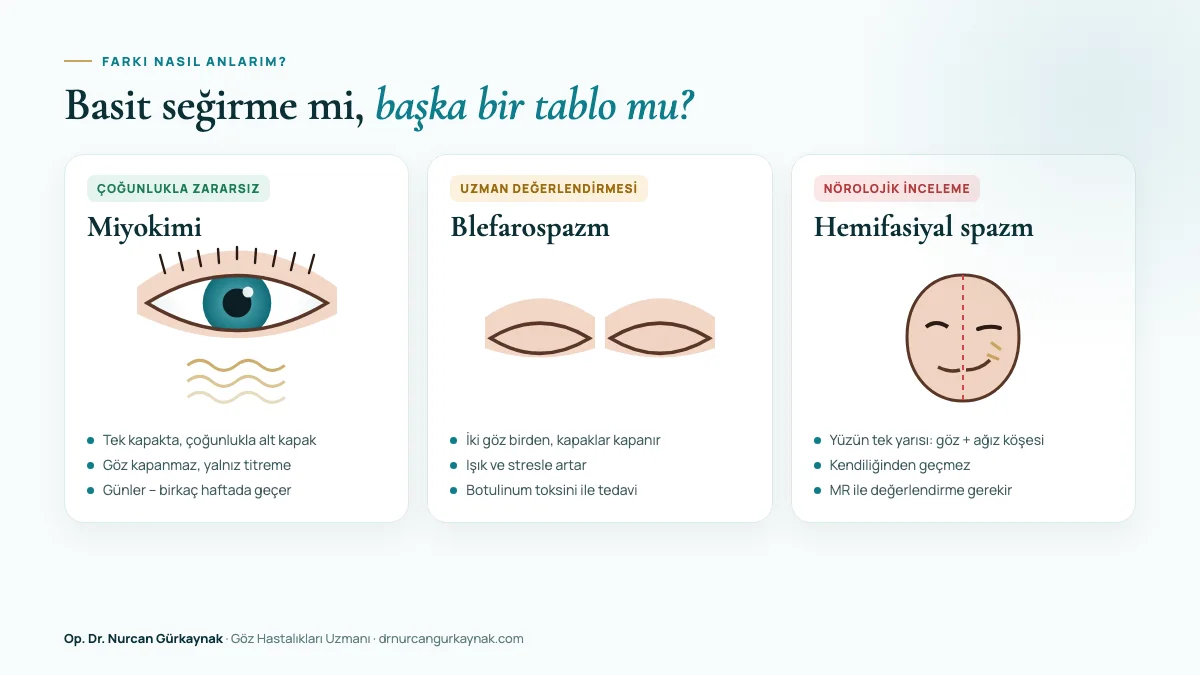
Blepharospasm is a movement disorder, seen mostly in middle age and beyond and usually in both eyes at once, that causes the eyelids to squeeze shut involuntarily. It worsens with bright light, stress and fatigue, and in advanced cases it can make reading and driving difficult. It often occurs together with dry eye and, in the early stages, can be mistaken for a simple dryness complaint.
Hemifacial spasm, on the other hand, affects only one side of the face. It usually begins around the eye and over time spreads to the cheek and the corner of the mouth. The cause is most often pressure on the facial nerve from a neighboring blood vessel, which is why it needs to be evaluated with a brain MRI. A neuro-ophthalmology evaluation is important in this context.
When Should You See an Eye Doctor?
If any of the following applies to you, it is best to get examined rather than waiting for the eye twitching to "go away on its own":
- The twitching has lasted more than three weeks,
- Your eyelid closes completely or you have difficulty opening your eye,
- The twitching spreads to your cheek, the corner of your mouth or other areas of your face,
- You have noticed drooping of the eyelid,
- It is accompanied by redness, discharge, pain or blurred vision,
- You have other neurological symptoms such as weakness in the face, difficulty speaking, or numbness in an arm or leg (in this case, go to the emergency room).
What Is Checked During the Examination?
During an eye examination, the first step is to understand the type of twitching and its triggers. Visual acuity and your glasses prescription are checked; the surface of the eye, the tear film and the eyelid margin are examined with a biomicroscope. If dryness, blepharitis or allergy is detected, treating these conditions also helps the twitching subside.
If the twitching is consistent with blepharospasm or hemifacial spasm, a neurological evaluation and, when necessary, imaging are planned. The most commonly used treatment for these two conditions is a low-dose injection of botulinum toxin into the relevant muscles; its effect lasts a few months and it can be repeated when needed.
If you are wondering how often you should have a routine eye check-up, you can read our guide to eye examination frequency.
If your twitching is persistent or spreading, a detailed eye examination can clarify the cause. You can get information about a general eye examination or book an appointment online.
Frequently Asked Questions
What causes eye twitching?
Eye twitching is an involuntary, mild contraction of the eyelid muscle, most often caused by triggers such as lack of sleep, stress, excess caffeine, prolonged screen use and dry eyes. The vast majority of cases are harmless.
How many days does eye twitching last?
Simple eye twitching usually resolves on its own within a few days to two or three weeks. It tends to shorten when triggers are reduced. Twitching that lasts longer than three weeks should be evaluated with an examination.
Does it mean anything if the right or left eye twitches?
No. Whether the twitching occurs in the right or left eye has no medical significance. What matters is how long the twitching lasts, whether it closes the eyelid, and whether it spreads to other areas of the face.
Is eye twitching caused by magnesium deficiency?
A marked magnesium deficiency can contribute to muscle twitching; however, there is no strong evidence that magnesium is the sole cause of eye twitching in healthy people. The most common causes are lack of sleep, stress and caffeine. Consult your doctor before taking supplements.
When is eye twitching dangerous?
If the twitching closes the eyelid completely, occurs in both eyes at once, spreads to the cheek and the corner of the mouth, or is accompanied by eyelid drooping or facial weakness, it may not be simple twitching and should be evaluated by an eye doctor or a neurologist.
Are eye drops used for eye twitching?
There is no drop specifically for twitching. However, if dry eyes are triggering the twitching, preservative-free artificial tear drops may provide relief. If there is an underlying allergy or eyelid inflammation, the treatment recommended by your doctor is applied.
Related Guides
- Digital Eye Strain and Protecting Yourself from Screens
- Dry Eye: Symptoms and Modern Treatments
- Drooping Eyelid (Ptosis): Causes and Treatment
- What Causes Red Eyes? When Is It an Emergency?
This article is for general information purposes only and is not a substitute for an examination. Please consult an eye specialist about your symptoms.