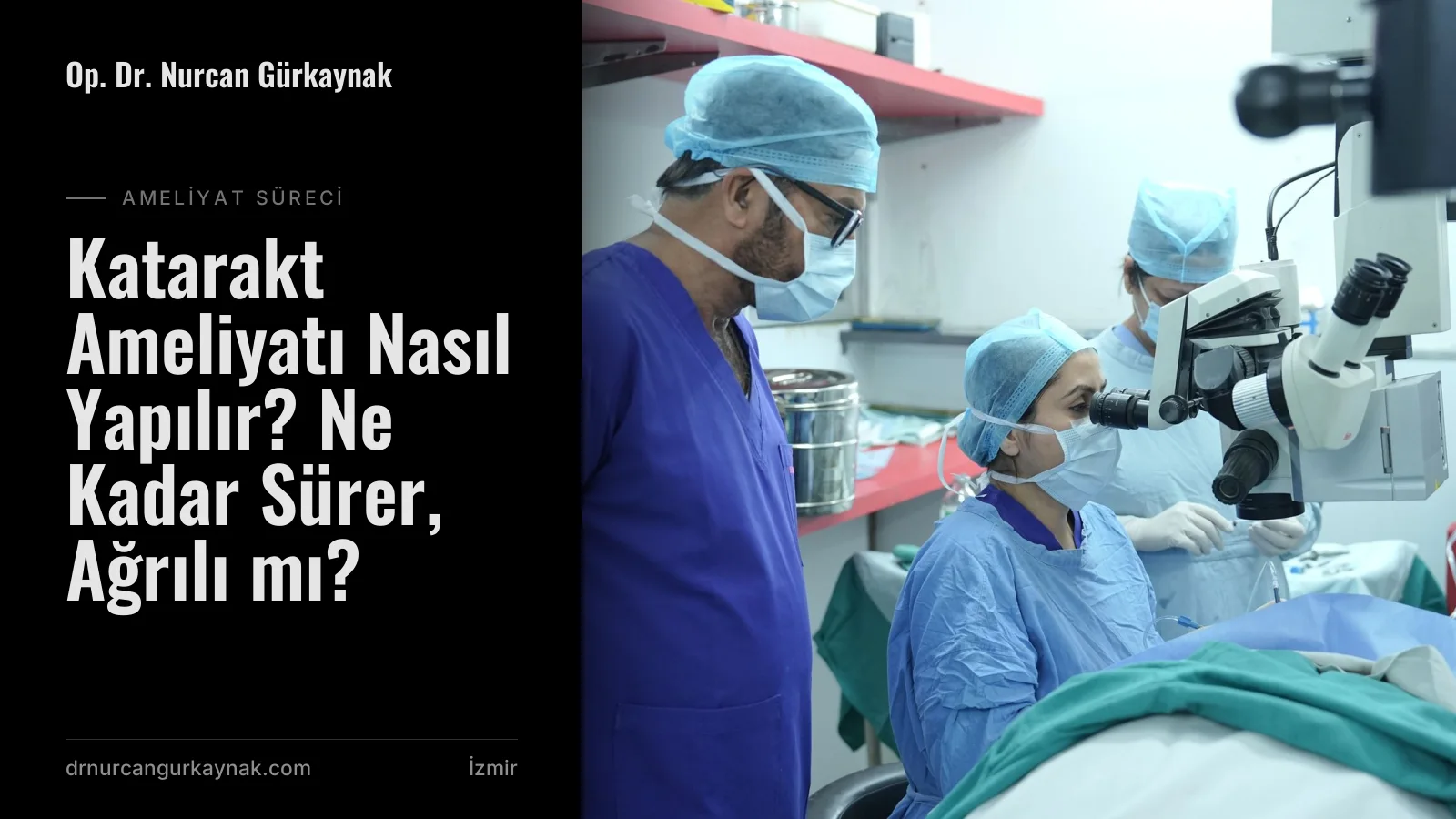
Cataract surgery is a procedure that usually takes 10-20 minutes and is generally performed with numbing drops, during which the clouded natural lens of the eye is replaced with an artificial intraocular lens. Including preparation and rest time, your stay at the hospital or operating room can last a few hours. The duration may vary from person to person depending on the structure of the eye and how advanced the cataract is. The exact plan is determined by the eye surgeon who will perform the operation after your examination.
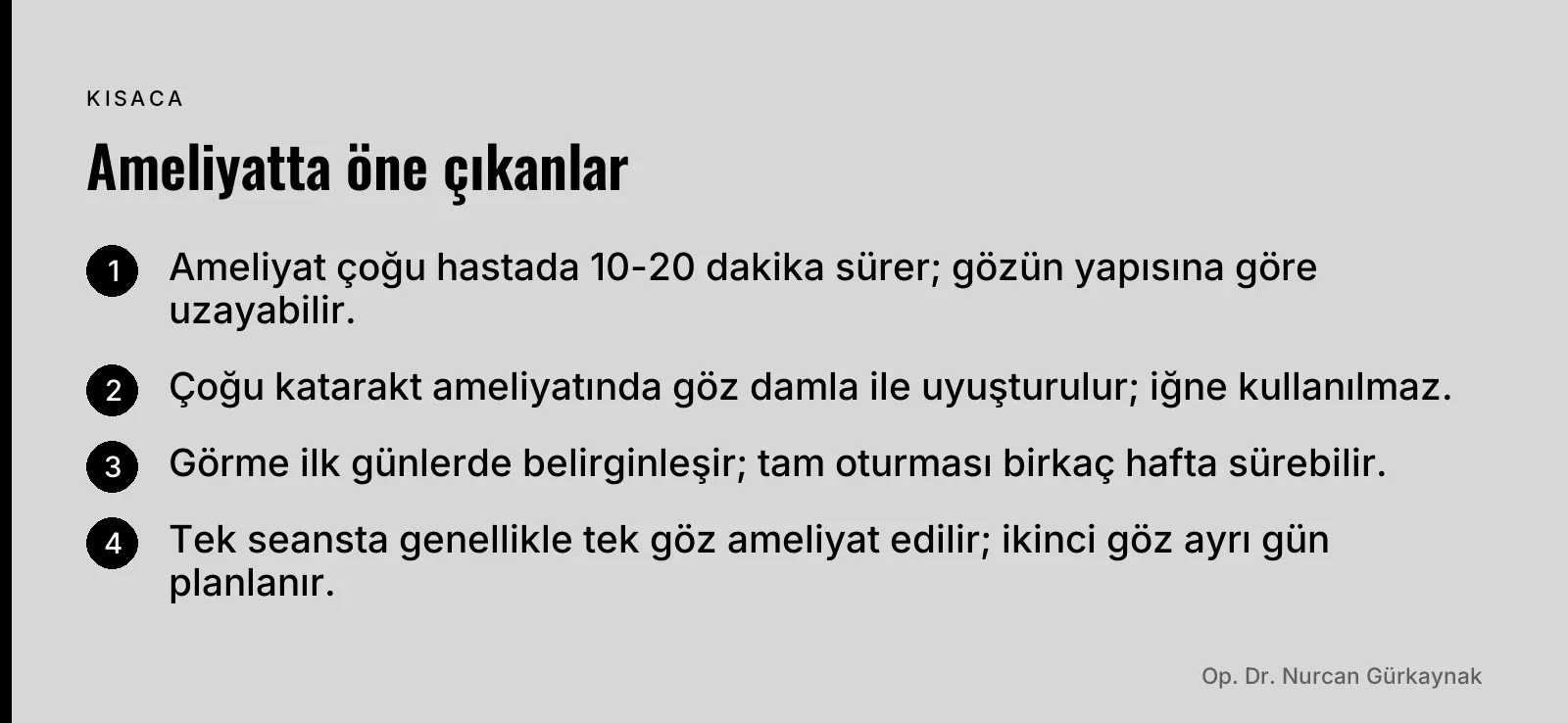
A cataract is a condition in which the lens of the eye gradually loses its transparency and becomes cloudy. In this article, we explain in simple terms how surgery day unfolds, how the eye is numbed, and answer frequently asked questions about pain.
How is cataract surgery performed, and how long does it take?
The most widely used method today is known as phacoemulsification. In this method, the clouded lens is broken into tiny pieces with ultrasound energy and removed from the eye. A foldable artificial lens is then placed through the same small incision.
The general steps of the procedure are as follows:
- The area around the eye is cleaned and the surgical field is prepared with sterile drapes.
- The pupil is dilated with drops and the eye is numbed.
- A tiny, millimeter-sized incision is made at the edge of the cornea.
- A circular opening is created in the front of the thin capsule that surrounds the lens.
- The clouded lens is broken up with ultrasound and removed by suction.
- An intraocular lens (artificial lens) is placed inside the capsule.
- The eye is checked according to its condition and the procedure is completed.
The surgery itself takes around 10-20 minutes for most patients. The duration may be longer if the cataract is very advanced, the structure of the eye is different, or there is an additional condition. Usually only one eye is operated on per session; a separate day is planned for the second eye.
How is the eye numbed for cataract surgery? Is it painful?
For many patients, the biggest concern is feeling pain during surgery or being aware that the eye is open. In most cataract surgeries, the eye is numbed with local anesthesia in the form of drops. This needle-free method is called topical anesthesia.
After the drops are applied, the surface of the eye loses most of its sensitivity. Patients generally describe sensations of touch, light pressure, or light rather than pain. In some cases, the surgeon may prefer local anesthesia administered around the eye or mild sedative support. Which method is appropriate depends on factors such as:
- The patient's anxiety level and ability to cooperate,
- How advanced the cataract is and the structure of the eye,
- Any accompanying eye conditions,
- General health status and medications being used.
During surgery, your eye looks toward a light, and you may see colored lights or blurry movements. This is normal. When the eye needs to move, the surgeon will guide you. Throughout the procedure, you remain awake and can communicate with the surgeon.
What is cataract surgery like? The flow of surgery day
Much of the fear of surgery comes from not knowing how the day will go. The general flow is as follows; details may differ depending on the clinic or operating room.
Before surgery
A detailed eye examination is performed before surgery. To calculate the power of the intraocular lens, the length of the eye and the curvature of the cornea are measured; this is called biometry. It is important to inform your doctor about the medications you use, blood thinners, and chronic conditions such as diabetes or high blood pressure. Instructions such as fasting, medication use, and when to start drops are given individually; it is important to follow them.
During surgery
Once you are taken into the operating room, the area around your eye is cleaned while you lie down. Drops are applied and the pupil dilates. The steps described above are then carried out. Small incisions that do not require stitches usually close on their own, but this depends on the surgeon's assessment.
After surgery
When the procedure is over, the eye may be covered with a protective shield or a dressing. After a short observation period, patients are usually sent home the same day. It is recommended that you do not drive yourself home and that a relative accompanies you. A follow-up check is carried out the next day or at the time your doctor determines.
For recommendations on using drops, avoiding touching the eye, and daily activities during recovery, you can read our guide on what to watch out for after cataract surgery.
What lens options are available?
In cataract surgery, the goal is not only to remove the clouded lens but also to place a suitable lens in its place. The choice of lens is determined together with your doctor according to the structure of your eye, your daily life needs, and any accompanying eye conditions. The generally known groups are as follows:
| Lens type | General characteristic |
|---|---|
| Monofocal | Usually focuses on a single distance (most often far); glasses may be needed for near vision. |
| Multifocal / extended depth of focus | Aims to support vision at more than one distance; may not be suitable for every eye. |
| Toric | Helps correct astigmatism (cylindrical error) in eyes that have it. |
Which lens is right for you can only be decided after an examination and measurements. Every lens type has its own advantages and limitations.
When does vision improve after surgery?
Many patients notice a clear sharpening of their vision within the days following surgery. However, as the eye heals, you may experience mild blurriness, a stinging sensation, watering, or light sensitivity during the first few days. It generally takes a few weeks for vision to fully settle and for your need for glasses to become clear. The timeline varies from person to person, so it is important to attend the follow-up visits your doctor has scheduled.
You should contact your doctor without delay if you experience any of the following:
- Eye pain that keeps getting worse,
- A sudden decrease in vision,
- Noticeable redness or discharge,
- Newly appearing flashes of light or curtain-like shadows in the eye.

Is cataract surgery risky?
Cataract surgery is among the most commonly performed operations in the world and gives good results in most patients. Still, as with any surgical procedure, infection, corneal swelling, increased intraocular pressure, clouding of the lens capsule (secondary cataract), or, rarely, more serious complications can occur. Results cannot be guaranteed; the level of risk depends on the structure of the eye, accompanying conditions (such as glaucoma, retinal problems, or diabetes), and the maturity of the cataract. For this reason, it is important to discuss the risks and expectations openly with your doctor before surgery.
What can be done to reduce fear of surgery?
- Write down your questions: Note down anything you are wondering about before going to your examination.
- Learn about the process: Knowing the steps of the surgery reduces the anxiety caused by uncertainty.
- Follow the instructions: Do not neglect the guidelines you are given on medication and eye drop use.
- Have someone with you: Having a loved one accompany you on the day of surgery is reassuring.
- Share your concerns: If you are very worried, tell your doctor; a plan can be made accordingly.
Is an evaluation needed for eye problems other than cataracts?
Vision complaints do not always stem from cataracts. Glaucoma, retinal diseases, corneal problems, or dry eye can also cause blurred vision. Because some conditions can occur together, the decision for surgery should be based on a comprehensive eye examination. For example, in conditions such as keratoconus, which affects the structure of the cornea, different procedures such as cross linking may be involved. This shows that each eye needs to be evaluated individually.
Sources and general information note
The general information in this article has been compiled in line with the public information provided on cataracts by organizations such as the Turkish Ophthalmological Association and the American Academy of Ophthalmology (AAO). This article is for general informational purposes only; it does not constitute a diagnosis or a personalized treatment recommendation. Whether surgery is necessary, as well as its timing and method, can only be determined by an eye doctor after an examination.
Where can you go for a cataract examination in İzmir?
Your cataract concerns can be evaluated at the practice of Op. Dr. Nurcan Gürkaynak, which offers eye disease examinations and eye surgery services in Alsancak, İzmir. For detailed information about the surgical process, you can visit the cataract surgery page.
Frequently Asked Questions
How is cataract surgery performed?
Cataract surgery is usually performed under local anesthesia. The clouded lens in the eye is broken up with an ultrasonic device and removed, and an artificial lens is placed in its position.
How long does cataract surgery take?
Cataract surgery usually takes 15–30 minutes. However, the total time may be longer when you include patient preparation and post-operative care.
Is cataract surgery painful?
You do not feel pain during cataract surgery because local anesthesia is applied. There may be mild discomfort after the surgery, but it is usually short-lived.
How long is the recovery period after cataract surgery?
The recovery process after cataract surgery usually begins within a few days. However, full visual recovery can take a few weeks.
What should be paid attention to after cataract surgery?
To protect your eyes after surgery, you should wear the glasses recommended by your doctor and take care to avoid contact with water.
Who can have cataract surgery?
Cataract surgery can be performed on individuals of any age who experience vision loss due to cataracts. However, general health status and other eye conditions must be taken into consideration.