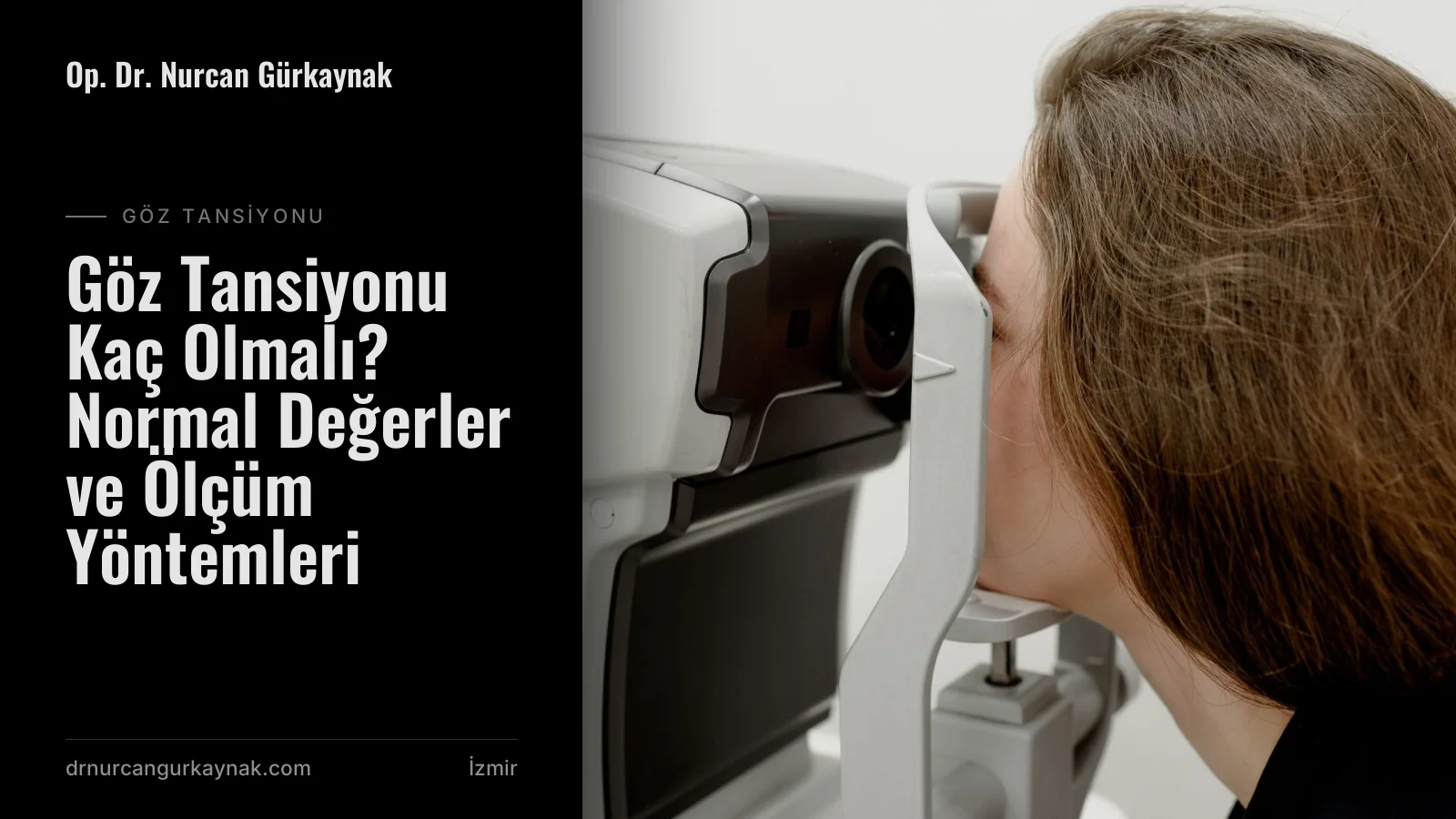
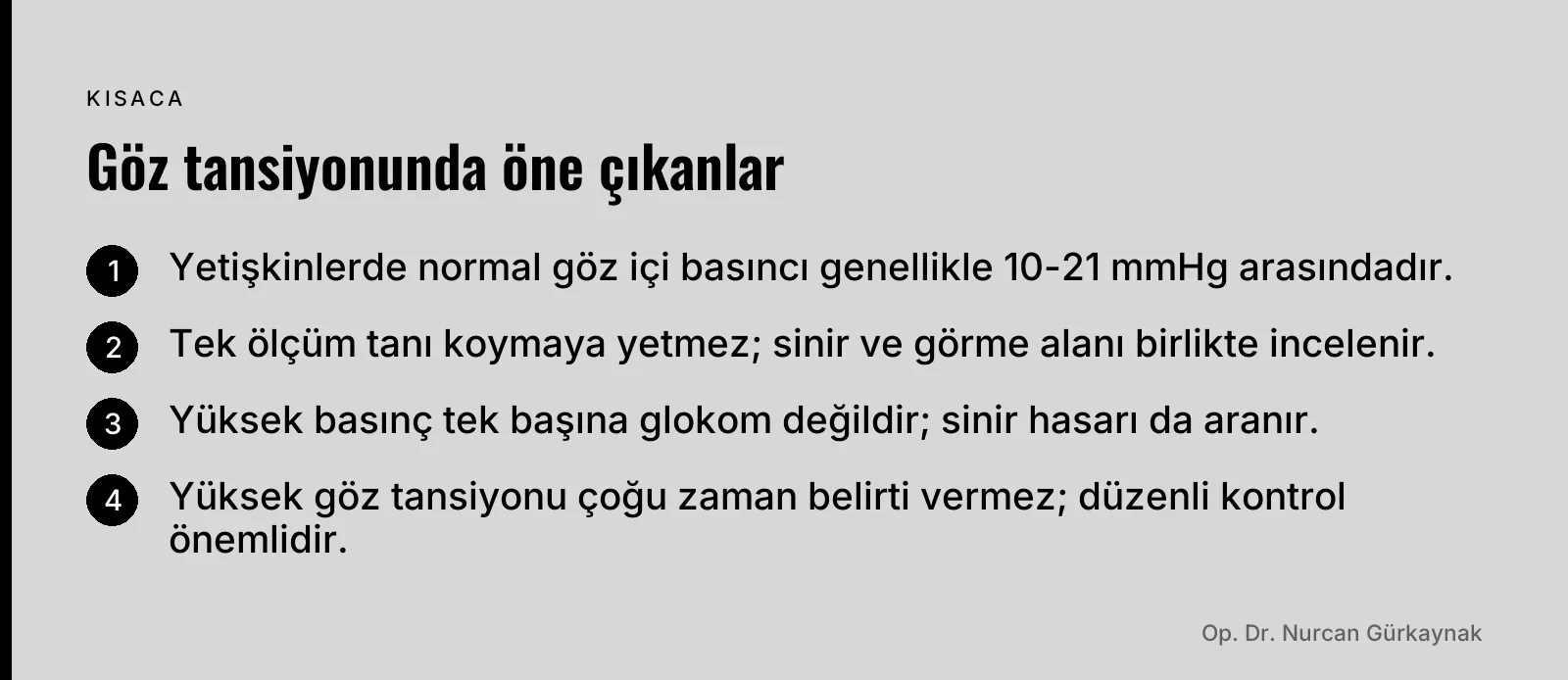
Eye pressure, also known as intraocular pressure, is considered normal at roughly 10-21 mmHg in adults according to most sources. Values above 21 mmHg are regarded as "high." However, a single measurement is not enough to make a diagnosis on its own: findings such as the structure of the optic nerve, corneal thickness and the visual field are interpreted together.
What is eye pressure?
"Eye pressure" is an everyday term for the pressure created by the fluid inside the eyeball. Its medical name is intraocular pressure, and it is measured in millimeters of mercury (mmHg). It is not directly related to blood pressure; it is a value independent of your general blood pressure reading.
The fluid produced inside the eye (aqueous humor) drains out through specific channels. When the balance between production and drainage is disrupted, intraocular pressure changes. This balance is necessary for the eye to keep its shape and for its tissues to be nourished.
What should eye pressure be? Normal value range
Normal intraocular pressure is generally between 10 and 21 mmHg. This range is based on a statistical average obtained from measurements in large populations; it does not represent a definitive "healthy limit" for everyone.
- 10-21 mmHg: The expected range for most people.
- 22 mmHg and above: Considered high; further examination is needed.
- Below 10 mmHg: Low pressure; the cause may need to be investigated.
In some people, nerve damage can occur even though the pressure is below 21 mmHg (normal-tension glaucoma). In others, the nerve stays healthy even though the pressure is high. For this reason, the answer to the question "what should eye pressure be" requires more than a single number.
How do eye pressure values change with age?
Intraocular pressure may show a slight tendency to rise with age. In children, values are generally close to those of adults, but examination conditions differ because measurement is more difficult.
| Group | General approach |
|---|---|
| Children | Close to the adult range; specialist assessment is needed for measurement |
| Adults | Approximately 10-21 mmHg |
| Older age | The same range applies; regular check-ups are important because glaucoma risk increases |
Pressure also fluctuates throughout the day. It may measure higher in the morning and lower at other times; this is why a single measurement can be misleading.
At what age does eye pressure start to rise?
High eye pressure is not a condition that "begins" at a specific age; it can occur at any age. However, the risk increases markedly after the age of 40. People with a family history of glaucoma are advised to have check-ups at an earlier age. In rare cases such as congenital glaucoma, problems can appear even in infancy.
What are the symptoms of high eye pressure?
High eye pressure often has no obvious symptoms. For this reason, it is described as a silent condition. By the time a person notices that their vision is declining, the damage may already have progressed.
Symptoms of high eye pressure appear especially when the pressure rises very quickly (acute angle closure):
- Severe eye pain and headache
- Blurred vision
- Seeing halos around lights
- Nausea and vomiting
- Redness in the eye
This picture requires urgent evaluation. You can read about when redness is an emergency in our article on what causes red eyes.
What causes high eye pressure?
At the root of high intraocular pressure is a disruption of fluid balance. Some factors that may contribute to this are:
- Blockage or inefficiency in the fluid drainage channels
- Advanced age and a family history of glaucoma
- Long-term use of cortisone (steroids)
- A blow to the eye or previous eye surgeries
- Certain eye diseases (inflammation, vascular problems)
- High degrees of myopia or hyperopia
- Systemic diseases such as diabetes
Which factor plays a role varies from person to person; therefore, determining the cause requires a physician's examination.
What is the difference between high eye pressure and glaucoma?
Glaucoma is an eye disease that causes progressive damage to the optic nerve and can result in loss of the visual field. Eye pressure is the most important risk factor for this disease. In other words, high pressure is not the same thing as glaucoma.
- Elevated eye pressure: The pressure is high, but there is no damage to the nerve; it is monitored.
- Glaucoma: There are signs of nerve damage and visual field loss; the pressure may be high or normal.
Visual field lost to glaucoma cannot be regained; the goal of treatment is to preserve existing vision and slow progression. You can find more details on our glaucoma (eye pressure) page.
How is eye pressure measured?
Intraocular pressure can be measured painlessly and quickly during an eye examination. The main methods are:
- Goldmann applanation tonometry: After the eye is numbed with drops, the measurement is taken by lightly touching the surface of the cornea. It is considered the gold standard.
- Air-puff (non-contact) tonometry: A screening measurement performed by blowing a puff of air onto the surface of the eye.
- Handheld tonometers: Can be used in special situations and in children.
An important factor affecting the measurement result is corneal thickness. When the cornea is thick, the pressure may measure higher than it actually is; when it is thin, it may measure lower. For this reason, pachymetry (measurement of corneal thickness) is often performed as well. In addition, an evaluation is made together with optic nerve examination, a visual field test and optical coherence tomography (OCT).
How can eye pressure be lowered? Treatment options
The goal of treatment is to bring the pressure down to a level that is right for you and prevent nerve damage. Your doctor will decide on the options based on your individual situation:
- Eye drops: Medications that reduce fluid production or increase drainage; this is the most commonly used method.
- Laser treatments: Aim to improve the function of the drainage channels.
- Surgical procedures: When drops and laser are not enough, a new outflow pathway for the fluid is created.
Because glaucoma eye drop prices vary depending on the type of medication, the brand and reimbursement conditions, it would not be accurate to give a fixed amount here; for up-to-date information, you can ask your pharmacy or your doctor. Using your drops regularly is also critical to the success of treatment.
What should people with high eye pressure avoid?
- Do not stop or change your drops or medication without consulting your doctor
- Do not postpone your follow-up appointments
- Do not use cortisone-containing eye drops unless your doctor recommends them
- Avoid exercises that require staying upside down for a long time (they may raise pressure in some people)
- Avoid drinking a large amount of fluid in a short time
- Do not assume "there is no problem" just because you have no symptoms
How can eye pressure be lowered at home? What are the limits?
Home remedies are not a substitute for medical treatment. Lifestyle changes can be supportive:
- Regular, moderate-intensity exercise such as walking
- A balanced diet and staying away from smoking
- Adequate sleep and stress management
- Taking your medications regularly
Is lemon balm tea good for eye pressure? There is not enough scientific evidence that herbal teas reliably lower intraocular pressure. It may have a relaxing effect, but it does not replace treatment; let your doctor know about any herbal products you use.
Are glasses used for eye pressure? Glasses correct refractive errors and do not lower intraocular pressure. You can wear them when you need a prescription, but treating high eye pressure still requires separate follow-up and treatment.
When should you see an eye doctor?
It is advisable to see an ophthalmologist in the following situations:
- Sudden severe eye pain, blurred vision or halos around lights (emergency)
- A family history of glaucoma
- Being over 40 and not having had an eye exam for years
- A feeling of narrowing in your side vision
- Diabetes, high myopia or long-term cortisone use
For other eye complaints, you can take a look at our dry eye page or our article on eye twitching. This article is for general information purposes only; a personal evaluation requires an examination.
For intraocular pressure measurement and glaucoma follow-up in Alsancak, İzmir, you can get information from the practice of Op. Dr. Nurcan Gürkaynak, and for more details you can read our glaucoma (eye pressure) treatment page.
Frequently Asked Questions
What should eye pressure be?
A normal eye pressure value is generally between 10 and 21 mmHg.
How is eye pressure measured?
Eye pressure is usually measured during an eye examination with a device called a tonometer.
What does high eye pressure mean?
High eye pressure can increase the risk of eye diseases such as glaucoma and may require treatment.
What does low eye pressure indicate?
Low eye pressure generally does not cause a problem for eye health, but in some cases it can affect blood flow in the eye.
What factors affect eye pressure?
Genetics, age, eye injuries, certain medications and general health are the main factors that affect eye pressure.
How can I keep my eye pressure under control?
You can have your eye pressure checked through regular eye examinations and follow the treatment methods recommended by your doctor.